
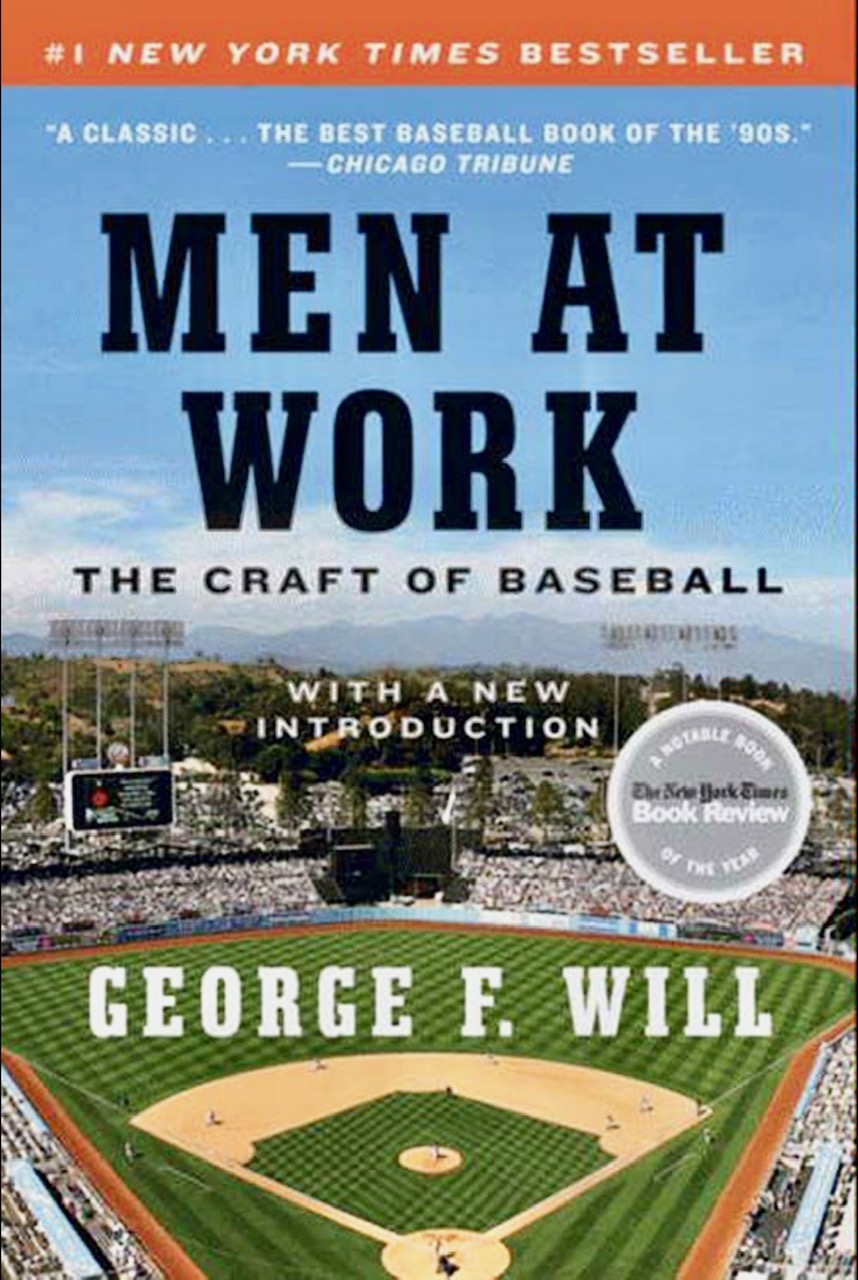
My grandfather watched the Cubs play and then in retirement I remember seeing him listen to them on the radio on his chair from Kingsburg, California. I am riveted on the game like he was and find myself locked into the College World Series in Omaha each summer where I live.
This book helped me see more deeply why my grandfather loved the game. He taught me to find the box scores in the newspaper when I was 4 and spending the night at their house. Today, I will keep book during CWS games and can almost hear his commentary from the numbers as they pile up on my sheet. Glad for this game.
My Summary Notes:
1. The Manager – Tony La Russa of the Oakland A’s said there are 6 dangers for a pitcher:
La Russa and Lefebvre say there are six ways a pitcher becomes vulnerable. Three of them are at specific points in the game. The first is when he is facing the first batter in the first inning.
The second specific point in the game when the pitcher is vulnerable is whenever he gets two quick outs in an inning and then lets up.
The third time a pitcher is vulnerable is in the fifth inning. “That’s decision time,” says Lefebvre. “He knows that if he can get through the fifth he can get a decision because he has a bull pen to save him.
The fourth and fifth vulnerabilities of pitchers concern unpreparedness, physical and mental. A pitcher who is not in good condition is susceptible to a sudden loss of mastery—a decline in the velocity of his pitches and an inability to control their location. And a pitcher is vulnerable who has not looked at the kind of charts that Duncan keeps.
The sixth point of vulnerability is, Lefebvre says (somewhat murkily), “when adversity goes against you.”
2. The Pitcher, Oral Hershiser of the Dodgers, Cleveland, Giants, and the Mets says be specific on pitches for the long haul:
In 1984 the 19-year-old Gooden set a National League record with a total of 32 strikeouts in two consecutive games. In those 17 innings he walked none and in one game he did not go to three balls on any batter. In that game he threw only 28 balls in 120 pitches. In 1985 Gooden became the youngest pitcher ever to win 20 games, the youngest to win the Cy Young Award, and the first since Sandy Koufax in 1965 and 1966 and Steve Carlton in 1972 to win the pitcher’s triple crown, leading the league in wins, strikeouts and ERA.
It’s not cutting down on the number of fastballs you call because actually it takes more effort to throw a curveball. The key is the number of pitches you’ll waste in a game. You’re not going to pitch around as many hitters as you might earlier in the game.” By “pitch around” he does not mean giving the hitter first base by not throwing strikes. Rather, he means trying to get an undisciplined free swinger out on pitches that are not strikes. “Pitching around” a batter requires more pitches than otherwise might be thrown. It is a defensive weapon that may have to be used late in a game.
3. The Batter: Tony Gwynn of the San Diego Padres was a fastidious student of hitting and studied pitchers and his swing to get on base.
Gwynn records on small videocassettes about the size of audiocassettes. They can be played back in an automatic frame-by-frame staccato sequence. To know if he is swinging correctly, he counts the frames from when the pitcher lets go of the ball until his, Gwynn’s, front shoulder “opens up”—turns to the right. Gwynn watches as the Cubs’ Rick Sutcliffe releases the ball toward the Gwynn on the screen, and as the tape ticks along from frame to frame, Gwynn counts, “There’s one… two… three… four… five… six… seven… eight… nine… ten…. There,” he says with satisfaction at the high count, “ten frames. That means I’m staying on the ball. I’m keeping my front shoulder in and staying back. If I open it up before then, I’m through, I’m out in front.” On the swing he has just watched on tape, he drove the ball for a hit.
4. The Hitter: Cal Ripken played every pitch on his toes from shortstop and said every pitch was different. There is a “game within a game.”
Say he’s a right-handed pull hitter and so the shortstop normally would play a right-handed pull hitter in the hole. But then the sequence of the count, and the pitcher on the mound who has a 90-mile-per-hour fastball, and the fact that he’s got two strikes on him, told me that I can actually know that this guy’s not going to pull this pitch, so I can run up the middle and he’ll hit a line drive or a one-hopper right by the pitcher’s glove and I can catch it up the middle and make the play. Then you hear somebody screaming in the dugout ‘How can you play me there?’—to me, that’s more gratifying than getting a bases-loaded hit. That’s the game within the game.”
5. Conclusion: In the US, the pursuit of happiness is the free pursuit of excellence in your vocation. I have never heard it defined as such, but I like it.
One afternoon, during Andre Dawson’s 1987 MVP season, he was in right field in Wrigley Field and the Cubs were clobbering the Astros, 11–1. In the top of the sixth inning Dawson ran down a foul fly, banging into the brick wall that is right next to the foul line. In the seventh inning he charged and made a sliding catch on a low line drive that otherwise would have been an unimportant single. When asked after the game why he would risk injuries in those situations when the outcome of the game was not in doubt, Dawson replied laconically, “Because the ball was in play.” Dawson probably found the question unintelligible. The words and syntax were clear enough but the questioner obviously was oblivious to the mental (and moral) world of a competitor like Dawson. At the beginning of this book I said that baseball heroism is not a matter of flashes of brilliance; rather, it is the quality of (in John Updike’s words) “the players who always care,” about themselves and their craft.
America has been called the only nation founded on a good idea. That idea has been given many and elaborate explanations, but the most concise and familiar formulation is the pursuit of happiness. For a fortunate few people, happiness is the pursuit of excellence in a vocation. The vocation can be a profession or a craft, elite or common, poetry or carpentry. What matters most is an idea of excellence against which to measure achievement. The men whose careers are considered here exemplify the pursuit of happiness through excellence in a vocation.
 Blicks Blog